---
title: "Beyond Spain: 10 Reasons these Spanish Language Destinations stand out"
description: Discover unforgettable Spanish immersion trips to Costa Rica and Puerto Rico, where students engage in culture, and adventure beyond the classroom.
image: https://blog.prometour.com/hubfs/Frog%20from%20Costa%20Rica.jpg
---
**Your Expert in Customized School Trips and Adult Groups**
- [ⓘ ECO-RESPONSABILITY](https://prometour.com/eco-responsible/)
- [CONTACT US](https://prometour.com/contact-us/)
[](https://prometour.com/)
- [Home](https://prometour.com/)
- [Popular Destinations](https://prometour.com/popular-destinations/)
- Americas
- [Quebec](https://prometour.com/quebec-school-trips/)
- [Canada](https://prometour.com/canada/)
- [United States](https://prometour.com/united-states/)
- [Martinique](https://prometour.com/martinique-school-trip/)
- [Costa Rica](https://prometour.com/costa-rica-school-trip/)
- [Ecuador](https://prometour.com/ecuador/)
- [Peru](https://prometour.com/americas/peru/)
- Europe
- [France](https://prometour.com/europe/france-school-trip/)
- [Spain](https://prometour.com/europe/spain-school-trip/)
- [Italy](https://prometour.com/europe/italy-school-trip/)
- [Greece](https://prometour.com/europe/greece/)
- [UK & Ireland](https://prometour.com/europe/uk-ireland-school-trip/)
- [Germany & Austria](https://prometour.com/europe/germany-austria/)
- [Euro-Mix](https://prometour.com/europe-euro-mix-school-trips/)
- Africa
- [Morocco](https://prometour.com/morocco-school-trip/)
- Asia
- [China](https://prometour.com/asia/china/)
- [Experiences](https://prometour.com/student-groups-experiences/)
- [Immersion Programs](https://prometour.com/immersion-programs/)
- [Educational Tours](https://prometour.com/educational-tours/)
- [Exchange](https://prometour.com/exchange-programs/)
- [Community Outreach](https://prometour.com/community-outreach/)
- [Homestay](https://prometour.com/homestay/)
- Teacher Zone
- [Teacher Tool box](https://prometour.com/teacher-and-group-leader-toolbox/)
- [Get a Quote](https://prometour.com/request_a_quote/)
- Teacher Guides
- [Best Destinations Travel Guide](https://prometour-4720094.hs-sites.com/best-destinations-guide)
- [Teacher's Guide to Traveling to Quebec](https://prometour-4720094.hs-sites.com/teachers-guide-to-traveling-to-quebec-with-students)
- [Teacher's Guide to Travelling to Costa Rica](https://prometour-4720094.hs-sites.com/teachers-guide-to-travelling-to-costa-rica-with-students)
- [Teacher's Guide to Traveling to Peru](https://prometour-4720094.hs-sites.com/teachers-guide-to-traveling-to-peru-with-students)
- [Teacher's Guide to Travelling to France](https://prometour-4720094.hs-sites.com/teachers-guide-to-traveling-to-france-with-students)
- [Teacher's Guide to Traveling to Spain](https://prometour-4720094.hs-sites.com/teachers-guide-to-traveling-to-spain-with-students)
- [Teacher's Guide to Travelling to Germany & Austria](https://prometour-4720094.hs-sites.com/teachers-guide-to-traveling-to-germany-austria-with-students)
- [Teacher's Guide to Traveling to UK & Ireland](https://prometour-4720094.hs-sites.com/teachers-guide-to-traveling-to-uk-ireland-with-students)
- [Teacher's Guide to Traveling to Italy](https://prometour-4720094.hs-sites.com/teachers-guide-to-traveling-to-italy-with-students)
- [Teacher's Guide to Traveling to China](https://prometour-4720094.hs-sites.com/teachers-guide-to-traveling-to-china-with-students)
- [Teacher's Guide to Traveling to Martinique](https://guides.prometour.com/teachers-guide-to-traveling-to-martinique-with-students)
- [Guide to Choosing an Educational Tour Company](https://prometour-4720094.hs-sites.com/choosing-a-tour-company)
- [Why Us](https://prometour.com/why-choose-prometour/)
- [Our Story](https://prometour.com/our-story/)
- [Our Staff](https://prometour.com/category/documentation/our-staff/)
- [Eco-responsible](https://prometour.com/eco-responsible/)
- [Reviews](https://prometour.com/reviews/)
- [BLOG](https://blog.prometour.com)
-
-
- Search
- [ⓘ About COVID-19](https://blog.prometour.com/a-message-from-prom%C3%A9tour-in-the-days-of-covid-19)
- [Request Info](https://prometour.com/contact-us/)
- [ACCESS MY ACCOUNT](https://registration-prometour.com/)
# Beyond Spain: 10 Reasons these Spanish Language Destinations stand out
May 06, 2026
|In [Costa Rica Trips](https://blog.prometour.com/tag/costa-rica-student-trips), [Spanish Trips](https://blog.prometour.com/tag/spanish-destinations), [Puerto Rico trips](https://blog.prometour.com/tag/puerto-rico-trips), [Spanish](https://blog.prometour.com/tag/spanish)
|By [Prometour Educational Tours](https://blog.prometour.com/author/prometour-educational-tours)
# Beyond Spain: 10 Reasons these Spanish Language Destinations stand out
May 06, 2026
|In [Costa Rica Trips](https://blog.prometour.com/tag/costa-rica-student-trips), [Spanish Trips](https://blog.prometour.com/tag/spanish-destinations), [Puerto Rico trips](https://blog.prometour.com/tag/puerto-rico-trips), [Spanish](https://blog.prometour.com/tag/spanish)
|By [Prometour Educational Tours](https://blog.prometour.com/author/prometour-educational-tours)
## [Costa Rica](https://prometour.com/costa-rica-school-trip/)
Multiple itineraries available: [Adventure Tour](https://prometour.com/costarica-adventure-tour), [Volunteering Tour](https://prometour.com/costarica-volunteering-tour/), [Immersion Program.](https://prometour.com/costarica-immersion-program/)
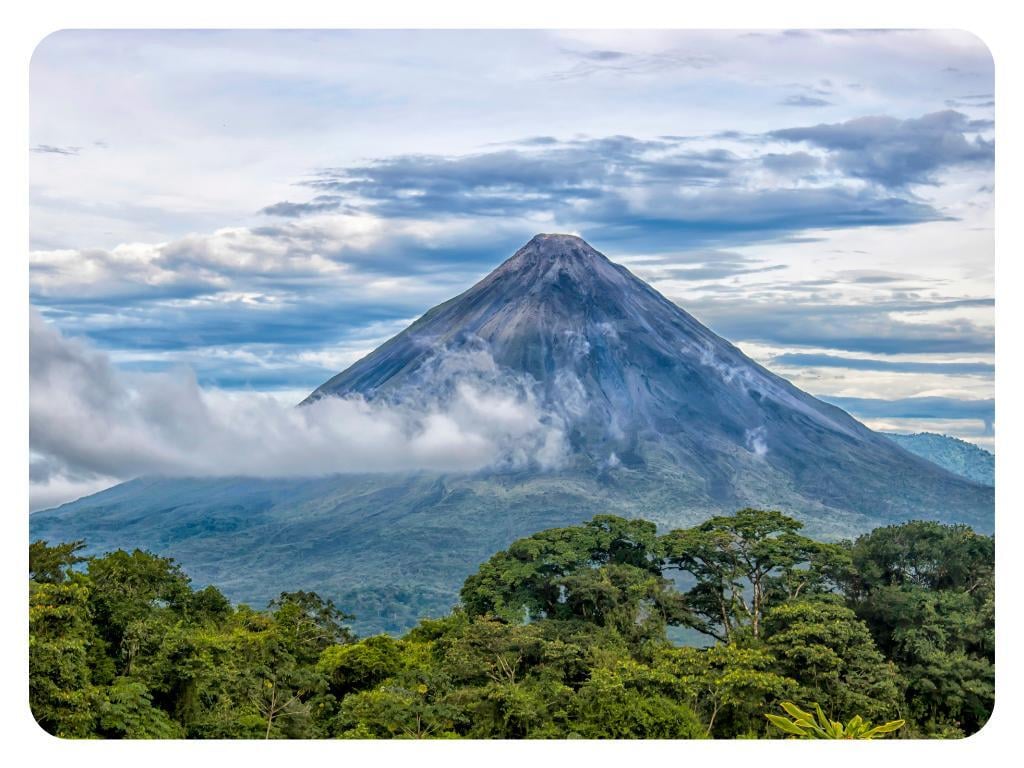
### 1. Students speak Spanish because they have to
The base for most Costa Rica programs is [El Rancho Lodge in La Guacima](https://prometour.com/costarica-immersion-program/) - a village where English is simply not an option. Families speak Spanish, guides speak Spanish, the market speaks Spanish. Immersion happens naturally because there is no fallback.
### 2. 70% of tropical forest life lives in the canopy - and students zip through it
Zip lining through the forest canopy at [Arenal Volcano National Park](https://en.wikipedia.org/wiki/Arenal_Volcano_National_Park) is not just fun - it is a biology lesson at altitude. Most of the biodiversity in a tropical forest never touches the ground. Your students will.
### 3. Sea turtle conservation on the Caribbean coast
The volunteering itineraries include hands-on conservation work protecting [Leatherback Sea Turtles](https://en.wikipedia.org/wiki/Leatherback_sea_turtle) at [Las Baulas National Marine Park](https://en.wikipedia.org/wiki/Las_Baulas_National_Marine_Park) - one of the most critically endangered species on Earth. Students do not observe. They participate.
### 4. Monteverde Cloud Forest is unlike anywhere else on the planet
The [Monteverde Cloud Forest Reserve](https://www.monteverdeinfo.com/monteverde-cloud-forest-reserve/) holds over 2,500 plant species, 400 bird species, and 100 mammal species in a single protected area. Walking through it is a genuine encounter with biodiversity at a scale that does not exist in Europe or North America.
### 5. The Immersion Tour uses language like a tool, not a subject
The [Costa Rica Immersion Program](https://prometour.com/costarica-immersion-program/) places students with host families, adds formal Spanish classes at Rancho de Espanol, and wraps it all in cooking, dancing, and daily village life. Students practice conjugations in the morning and make gallo pinto with a host family in the evening. The acquisition that happens in a week takes years in a classroom.
**Explore Costa Rica itineraries -** [**Adventure, Volunteering, and Immersion programs**](https://prometour.com/costarica-adventure-tour)
## [Puerto Rico](https://guides.prometour.com/puerto-rico-spanish-cultural-tour)
[5 Day Immersive student itinerary in Puerto Rico. ](https://guides.prometour.com/puerto-rico-spanish-cultural-tour)
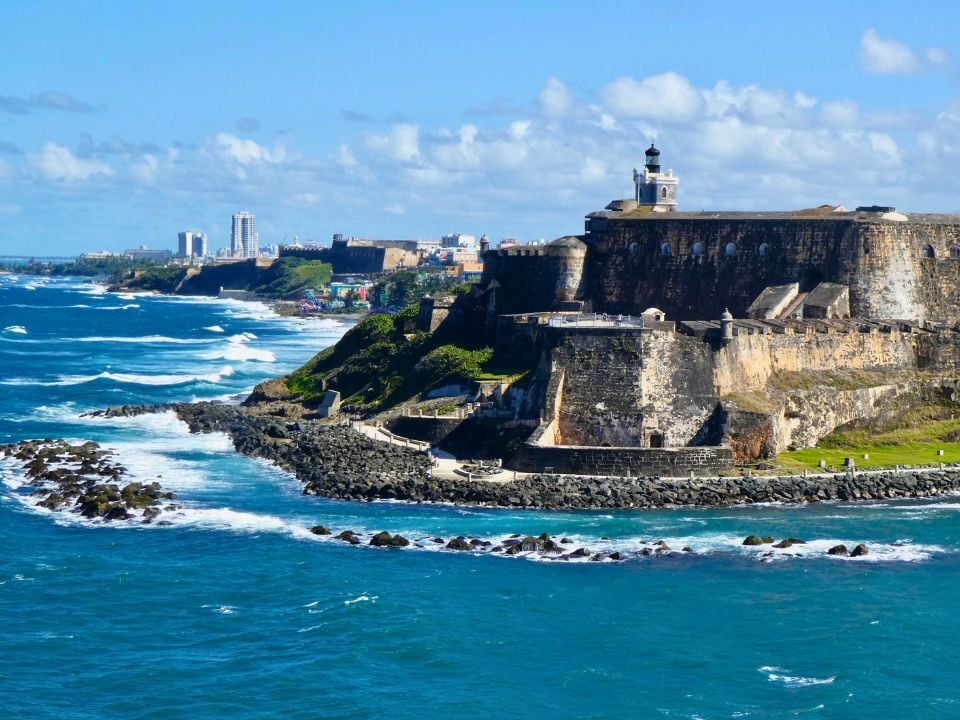
### 6. No passport. Domestic flight prices. Full Spanish immersion.
Puerto Rico is a U.S. territory - American students do not need a passport, flights price as domestic routes, and there are no entry complications. But the moment you land in San Juan, you are in Spanish. It is the most frictionless immersion trip available for U.S. schools.
### 7. 500 years of history in one afternoon in Old San Juan
The [Castillo San Felipe del Morro](https://www.nps.gov/saju/index.htm) is a 16th-century Spanish citadel overlooking the Atlantic - a [UNESCO World Heritage site](https://whc.unesco.org/en/list/266/) and a National Historic Site managed by the U.S. National Park Service. It puts the entire arc of Caribbean colonial history in front of students on Day 1.
### 8. The Taino people built something extraordinary here
The [Centro Ceremonial Indigena de Tibes](https://en.wikipedia.org/wiki/Tibes_Indigenous_Ceremonial_Center) in Ponce is one of the most significant archaeological sites in the Caribbean - ceremonial plazas and ball courts built by the Taino people, who inhabited the island for centuries before European contact. A reminder that the story of Puerto Rico did not start in 1493.
### 9. The bioluminescent bay has no equivalent in Europe
At [La Parguera](https://en.wikipedia.org/wiki/La_Parguera,_Puerto_Rico), students kayak at sunset through water that glows blue-green with every paddle stroke. Puerto Rico has three of the world's few remaining functional [bioluminescent bays](https://en.wikipedia.org/wiki/Mosquito_Bay). There is simply nothing like this on a European trip.
### 10. El Yunque is the only tropical rainforest in the U.S. National Forest System
The [El Yunque National Forest](https://www.fs.usda.gov/elyunque) covers 28,000 acres of Caribbean rainforest - the only one federally protected in the U.S. system. For science and biology teachers, it is a full outdoor classroom. It also happens to be one of the most beautiful places in the Caribbean.
**Puerto Rico itinerary details coming soon - contact us to learn more.**
**Both Costa Rica and Puerto Rico are fully planned, all-inclusive programs with Prometour's bilingual tour directors on the ground every day. 33 years. 98% of groups say they would travel with us again.**
*Ready to explore options for your class? Contact your Prometour consultant for availability, pricing, and a personalized quote.*

[Prometour Educational Tours](https://blog.prometour.com/author/prometour-educational-tours)
Prométour designs customized educational travel that helps teachers turn the world into a classroom. We partner with teachers and educators to create meaningful, culturally immersive student experiences. Every journey is built with care, expertise, and a deep belief in learning through real world connection.
Share
Tweet
+1
Share
Pin
Share
Tweet
+1
Share
Pin
###### #ThisIsWhyWeTravel
## Let Your Education Take Flight.
Prométour’s mission is to design customized educational group travel to support teachers and help them to make their students discover, share and understand the diversity and beauty of the world around them.

[](https://blog.prometour.com/hs/cta/wi/redirect?encryptedPayload=AVxigLL7CFB2tvRvzYw8Wk3Ins3CvlKevKiiEt6mpeFbmUmCA0Jj6hymZF20YZu4vcuPFOLjxE3Faxmg8Tmf2hx9i4Np114fPzDa6WXKltLhuj9kCtoc9%2F8Vi5BuPsajLPiGwrM3HbzMcckWNL0tCgZi2okIHi1hQxyctpqjOMWsNQ%3D%3D&webInteractiveContentId=206755811235&portalId=4720094)
### About Us

Bringing learning to life through travel for over 33 years.
### Explore
- [Destinations](https://prometour.com/popular-destinations/)
- [Teacher Zone](https://prometour.com/teacher-and-group-leader-toolbox/)
- [Why Us?](https://prometour.com/why-choose-prometour/)
- [Reviews](https://prometour.com/reviews/)
- [Get a Quote](https://prometour.com/request_a_quote/)
- [Privacy Policy](https://prometour.com/privacy-policy/)
### Office
### Prométour 2000 152 Rue Notre Dame Est, Suite 300, Montréal Québec, Canada H2Y 3P6
### Latest
© 2020 Prométour Educational Tours and Beyond by Prométour are Prométour 2000 brands | OPC Travel Agent Permit Holder #702379 from Québec, Canada